
 by John C. Lemon
All humans are theologians. This singular opening statement served as the 1-2 punch of a graduate school professor. With attentions captured, a surgical, unapologetic assertion was made. Within humanity, lies a compelling force that drives us toward meaning. The working conclusion of that force would later be identified as the grand unifying theory (GUT) — a rationale, incidentally flawed by the unavoidable, specious interpretations of life events.
We wrestle to contextualize our circumstances. The alternative is hyper-passivity – a life in chaos, resigned, if not surrendered, to unintelligible watershed moments. With every categorized observation and determined reaction, we engage in an on-going test of how we believe the world to work. The most adaptive, periodically adjust their GUT when understood it necessary to do so. These adjustments are most effective when informed by precedent and comparative note taking.
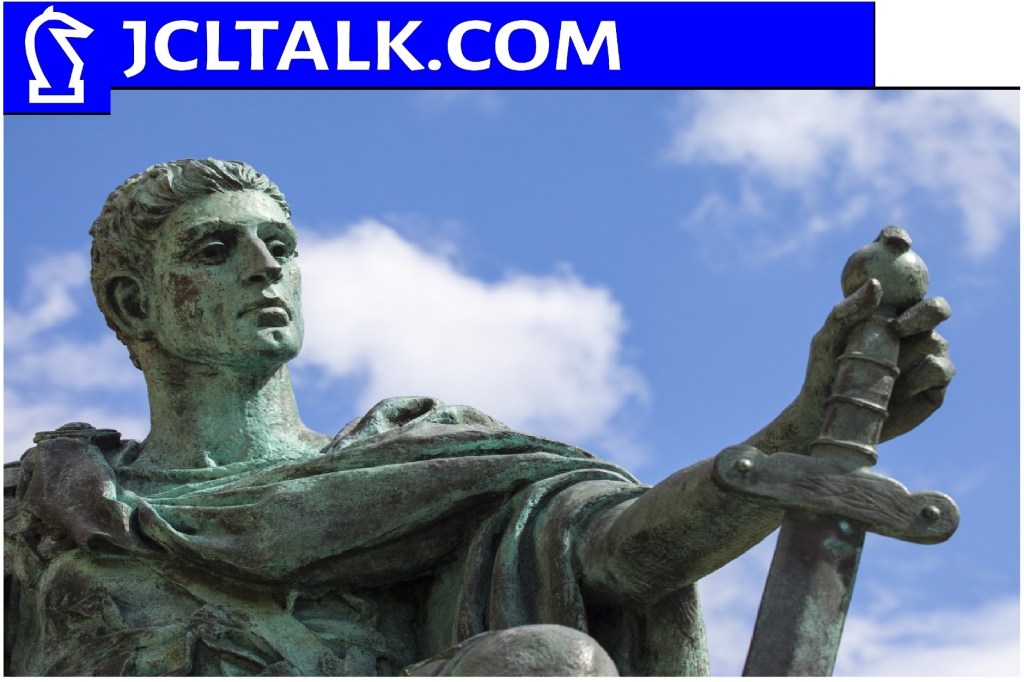
The rise and lore of Constantine the Great, Roman Emperor, 312-337 CE, continues to intrigue. Historian, biographer and perhaps propagandist, Eusebius of Caesarea archives in, Life of Constantine, events that would propel the fourth century son of Italy’s military governing class into world prominence. In his tome, civil war is recorded to have erupted in 306 CE following the battlefield death of Constantine’s father, Emperor Constantius I. Six years removed, Maxentius, Constantine’s brother-in-law, stood as final challenger to Rome’s unofficially coronated heir apparent. Eusebius recounts the apparition preceding the Battle of Milvian Bridge just outside of Rome:
He [Constantine] saw with his own eyes the trophy of a cross of light in the heavens, above the sun, and bearing the inscription, CONQUER BY THIS. At this sight he himself was struck with amazement, and his whole army also, which followed him on this expedition, and witnessed the miracle. (chp. 37)
Fellow historian and apologist, Lucius Lactantius offers a variation — recording Constantine’s admonishment to “delineate the heavenly sign on the shields of his soldiers” to have taken place in a dream. Whether awake or asleep, the retelling of the account not only survived, but served as explanation for the tipping point in the defeat of Maxentius’ superior forces.
Allegiance to deity was common place among the polytheistic ruling class of ancient Rome. It was the rite of political cajolers in a market ripe with claims of extra-human activity and deistic intervention. Emperor Diocletian’s, 284 – 305 CE, brutal persecution of Christians is believed the function of a joint campaign with Galerius, 305 – 311 CE, to make Rome great again. The horrific exercise went beyond extreme prejudice towards a peculiar people but underpinned a belief system requiring appeasement and curried favor from Roman gods feared offended by monotheistic practice. On the face of it, Constantine’s testimony of divine intervention at the Milvian Bridge would only be thought peculiar due to the Christian God he credited.
With every categorized observation and determined reaction, we engage in an on-going test of how we believe the world to work.
Today, there are no shortage of pundits from academics to zealots offering analysis in effort to explain political movements within the United States. And despite our best efforts to de-integrate tribal mysticism from intellectual thought, we find ourselves in support of government figures — disregarding detractions in character and competence based on theological perspective. Too often, the Achilles heel of the religious has been to check out intellectually when hearing of God’s engagement. But there is no such admonishment within biblical ethos for such a position. On the contrary, the body politic is stewarded with proving and assessing governance — even, and perhaps especially, among those feigning appointment by divine intervention.

Outgoing White House Press Secretary, Sarah Huckabee Sanders opined, in a January 2019 CBN News interview, that God wanted Donald J. Trump to be President. Sanders, by far, is not alone in her assessment. Consenting champions of this view are fox holed among the internet’s market of ideas — passionately ready to defend their position. The slogan, “Make America Great Again,” rings true. A course correct towards American exceptionalism is not without prophetic promise. And, as a placeholder for more capable hands, the mantra could very well stand as reset in the clarion call to provide, judge and model governance among observing nations. But, what we have in Mr. Trump is a co-opt.
Co-opt, by definition, is the diversion of use or role from an original intent to re-purpose for one’s own use. Pamela Meyer, author of LieSpotting highlights in her 2011 TED Talk — “How to Spot a Liar,” the masterclass confession of notorious confidence man and British detainee, Henry Oberlander:
Look, I’ve got one rule. Everyone is willing to give you something. They are ready to give you something for whatever it is they are hungry for.
The dog whistles and veiled meanings of the current administration have been well documented and deciphered by those in the know. And, there are those with less clandestine ambitions, nostalgic in hope for the slowing of a world changing too quickly. I concede the ancient tradition within Christendom of divine intervention among nations in conjunction with responsibility, as co-laborers, to prove callings by the proving of character. Meyer’s rube protection is to be honest with our desires. The extent and shame of any con is not only in being duped, but in what we surrender, the disillusionment that follows and pejorative association with what was intended to bring life. The con is a cooperative act and we must determine when we have surrendered enough.
Righteousness exalts a nation, but sin is a reproach to any people (Proverbs 14:34, ESV).


 JCLTalk.com